Resilience
Engineering, psychology, ecology: many are the areas of application of this word that usually stands for the ability of a material, an organism or a structure to withstand stressors and reinstate a state of new equilibrium.
So it means the level of adaptability to exogenous disruption. In the reflections about the environment, the importance of such concept has grown exponentially at a pace with the rise in the effects of climate change.
Since then, it has affected the experts’ actions and developments to create anthropic places that can withstand environmental shock. In this sense, smaller, greener urban settlements should be developed, as nature is very resilient.
As a consequence of such concept, some European and Western countries are experimenting with the so-called transition towns: communities, small villages, districts or veritable cities that from the bottom up decided to get a “road map” for themselves, towards more and more sustainable, and therefore resilient, paradigms.
Use of alternative energy sources, new forms of mobility, sustainable farming techniques, consumption of local produce, Time Banks, self-production groups. Anything that may help any community live with a lower environmental impact by producing less waste and consuming less non-renewable resources.
People are increasingly aware that, in the broader organism of the natural ecosystem, a key role is played by the resilience of both individuals (psychological resilience) and organised groups (organisational resilience).
Psychological resilience means the ability to cope with traumatic events, to positively reorganise one’s life when faced with some problem.
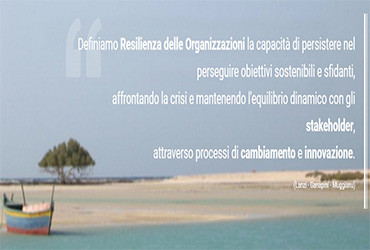
Organisational resilience means the ability to keep pursuing sustainable, challenging goals, by facing crises in a dynamic balance with the stakeholders through change and innovation.
share on