The composting cycle
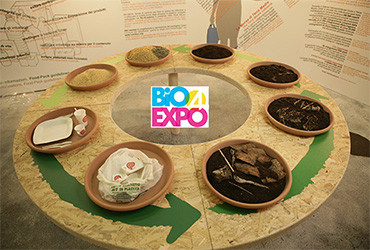
Composting is a process causing several organic materials to disintegrate and transform by action of microorganisms.
The final product, known as compost, is a natural fertiliser to use on meadows or farmland before ploughing, in order to improve soil structure and nutrient bioavailability.
Moreover, it is a biologic activator increasing microfloral biodiversity in the soil.
The use of compost as fertiliser is at the base of many sustainable agricultural techniques, from organic to biodynamic farming, and stands as a crucial element to return organic matter to the soil.
Producing high quality compost requires a careful selection of the material needed in the process: for instance, nitrogen-rich waste may be used (vegetable leftovers, gardening waste, vegetable-origin household waste), carbon-containing waste (trims and dead leaves), herbivore animal litter, paper, cardboard and natural fabric such as wool and cotton.
Depending on the environment where the process takes place determines the type of compost, which is generally divided into three types: industrial, household and community compost.
The presence or absence of oxygen during the process determines whether compost is aerobic or anaerobic.
share on